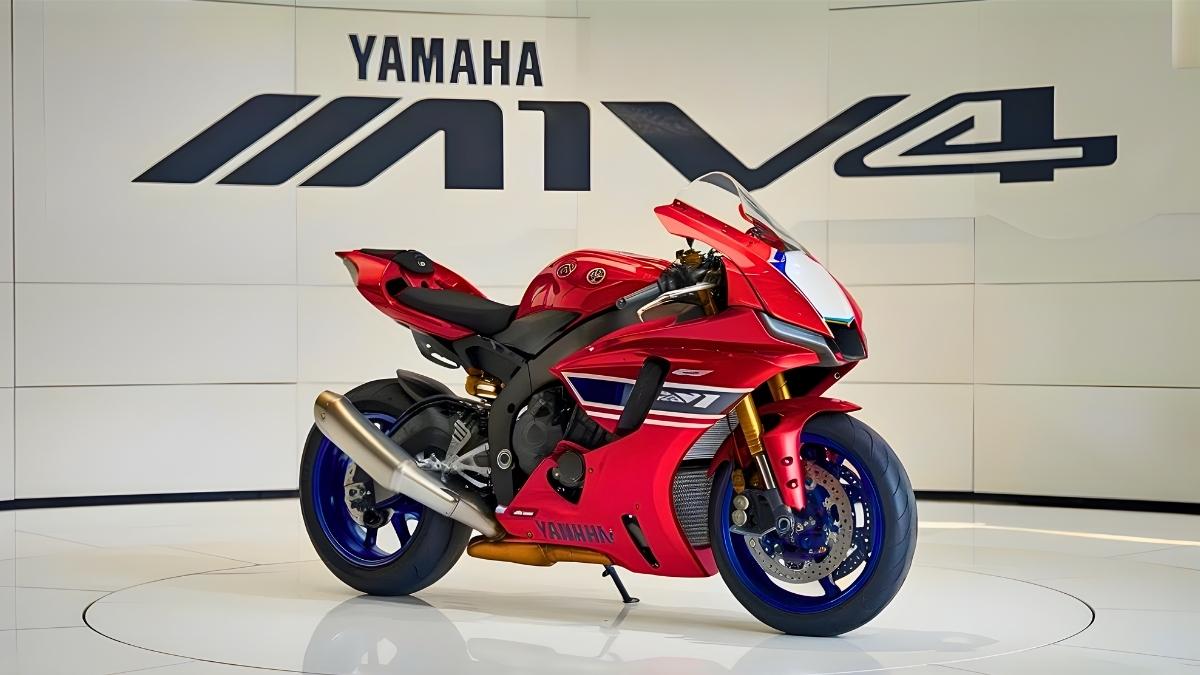
For years, Yamaha’s M1 has been synonymous with smooth handling, precision cornering, and an inline-four engine philosophy that set it apart in MotoGP. However, with the competitive landscape rapidly evolving, Yamaha has taken a bold step forward. The 2026 Yamaha M1 V4 marks a historic shift for the brand, introducing a completely new engine configuration and signaling a new era in Yamaha’s racing ambitions. This long-anticipated reveal has captured the attention of MotoGP fans, engineers, and riders around the world.
A Turning Point for Yamaha Racing
The decision to move from an inline-four to a V4 engine is not a small one for Yamaha. For decades, the inline-four was central to the M1’s identity, delivering exceptional balance and rideability. However, rivals using V4 engines have gained advantages in acceleration, top-end power, and adaptability to modern aerodynamic demands.
With the 2026 M1 V4, Yamaha acknowledges the need to evolve. This change represents not a rejection of past success, but a commitment to future competitiveness. Yamaha’s engineers have reportedly spent years refining this V4 concept, ensuring it maintains the brand’s signature smoothness while unlocking new performance potential.
The V4 Engine and Performance Philosophy
At the heart of the 2026 Yamaha M1 is its newly developed V4 engine. Designed specifically for MotoGP regulations, this power unit focuses on improved power delivery, higher top speeds, and better compatibility with advanced electronics and aerodynamics.
The V4 layout allows for more compact packaging, which improves mass centralization and rear traction. This translates into stronger acceleration out of corners and greater stability during hard braking. Yamaha’s goal was not just raw horsepower, but a usable and controllable powerband that suits a wide range of riding styles.
Early impressions suggest that Yamaha has focused heavily on throttle response and consistency, ensuring riders can push with confidence throughout a race distance. The engine’s sound alone marks a dramatic departure from the past, signaling a new identity for the M1.
Chassis and Handling Evolution
Despite the engine change, Yamaha has not abandoned its reputation for exceptional handling. The 2026 M1 V4 features a redesigned chassis developed to complement the new engine layout. Engineers have worked to preserve the front-end feel that Yamaha riders have praised for years.
The frame geometry has been refined to balance agility and stability, particularly during high-speed corner entry. Swingarm design and suspension setup have also been reworked to manage the increased torque output of the V4 engine. The result is a bike that feels planted under acceleration while remaining nimble through technical sections of the track.
This careful integration of engine and chassis highlights Yamaha’s holistic approach to development rather than chasing performance in isolation.
Aerodynamics and Modern MotoGP Design
Modern MotoGP is as much about aerodynamics as it is about engines, and the 2026 Yamaha M1 V4 reflects this reality. The bike features a completely revised aerodynamic package, including updated winglets and fairing shapes designed to improve downforce and reduce wheelie tendencies.
These aerodynamic elements are more seamlessly integrated than before, maintaining efficiency without excessive drag. Improved airflow management also aids cooling and stability at high speeds, particularly on long straights where V4-powered rivals have traditionally excelled.
Yamaha’s aerodynamic philosophy focuses on consistency and predictability, helping riders maintain control while maximizing performance across varying track conditions.
Electronics and Rider Adaptability
Electronics play a crucial role in MotoGP success, and the 2026 M1 V4 benefits from Yamaha’s latest advancements in this area. Traction control, engine braking, and power delivery maps have been refined to suit the characteristics of the V4 engine.
The updated electronics package allows riders to adapt the bike more easily to tire wear, fuel load, and changing grip levels. This flexibility is essential in modern racing, where fine margins often decide race outcomes.
Yamaha has reportedly worked closely with its factory riders during development, ensuring that the electronics enhance rather than interfere with rider input.
What This Means for Yamaha’s Riders
The introduction of the M1 V4 represents a learning curve for Yamaha’s riders, but also a major opportunity. Riders who previously struggled with straight-line speed may now find themselves better equipped to battle at the front.
The new bike demands adaptation, but it also offers a more competitive platform capable of challenging the strongest teams on the grid. With continued development, the M1 V4 could become a title-contending machine in the seasons ahead.
This evolution also signals Yamaha’s long-term commitment to MotoGP, reassuring fans and teams that the brand is fully invested in returning to championship-winning form.
Fan Reaction and MotoGP Impact
The unveiling of the 2026 Yamaha M1 V4 has sparked intense discussion among MotoGP fans. Many see it as a necessary and exciting move, while others view it as the end of a unique era. Regardless of perspective, the M1 V4 represents progress and adaptability in a highly competitive sport.
Its presence on the grid reshapes Yamaha’s image and raises expectations for future performance. The shift also highlights how MotoGP continues to push manufacturers toward innovation and evolution.
Conclusion
The 2026 Yamaha M1 V4 is more than just a new race bike; it is a statement of intent. By embracing a V4 engine and rethinking its approach to performance, Yamaha has opened the door to a new chapter in its MotoGP journey. With a focus on power, balance, aerodynamics, and rider confidence, the M1 V4 stands as a revolutionary step forward. As development continues and racing unfolds, this machine has the potential to redefine Yamaha’s place at the top of MotoGP once again.
Disclaimer
This article is based on early information, industry reports, and official announcements available at the time of writing. Final specifications, performance figures, and design details may change as development progresses. Readers should refer to Yamaha and MotoGP sources for the most accurate and up-to-date information.